
Mother Daughter Memories: Roman Holiday and Florence Renaissance
When is the right time to take your daughter to Europe?
Timing Your First European Adventure
Taking your daughter to Europe is an exciting milestone worth careful planning. Middle school years, typically ages 10-14, offer an ideal starting point when children have:
- Developed physical stamina for walking and sightseeing
- Basic historical context from school
- Curiosity about different cultures
- Strong enough attention span for museums and tours
Italy serves as the perfect introduction to Europe, especially for young travelers.
When my daughter visited at thirteen, her foundation in Ancient History and religious studies brought Italy’s magnificent art and architecture to life.
Her violin training created exciting connections with Vivaldi and seeing priceless instruments.
Italy offers that perfect mix of familiar and fascinating. Ancient ruins sit beside gelato shops,
From the breathtaking Colosseum to perfect pizza, it’s a destination that naturally bridges the interests of both adults and teens.
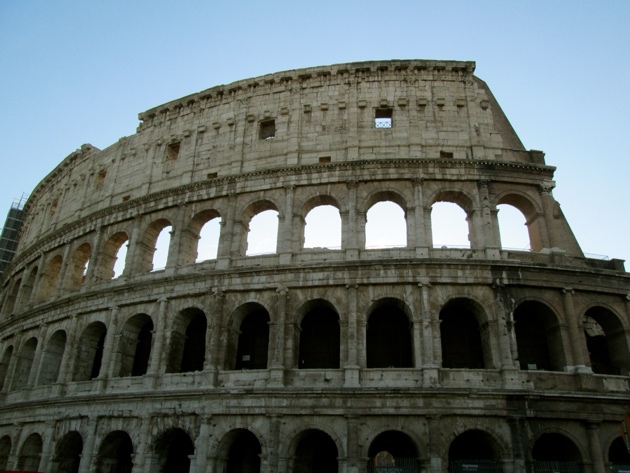
Collosseum where Romans avoid-now
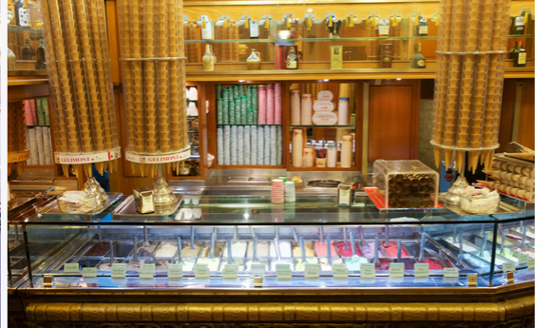
Giolitti where Romans go for gelato
Like most people planning a trip to Europe, I started with internet searches for “Family Trips to Italy.” The usual suspects popped up – group tours with packed schedules and fixed itineraries.
I couldn’t see my daughter and myself thriving in a big group, rushing from site to site on someone else’s timeline. We needed something different.
That’s when I found Zicasso, an agency that customizes and personalizes travel. Working with their Italy specialist, we created a journey that fit our interests and budget perfectly.
A simple bonus example to customized travel is choosing how to book hotels. Sometimes I use hotel points, sometimes an agent’s connections lead to lovely room upgrades.
Of course, it’s easy to plan a few day’s itineraries on your own. There are many curated or expert-led itineraries.
There’s a special joy in traveling watching your daughter light up when she connects her knowledge to the destinations she helped choose.
Rome: Bringing Ancient History Alive
For this first adventure in Rome, we had incredible guides who knew exactly how to bring ancient history alive for both of us.
Well-paced activities let us experience the most desired sites without exhaustion – from the Forum to the Vatican, each day brought new discoveries.
A mix of scheduled tours and free time gave us chances to both learn and explore.
Here’s how our Roman adventure unfolded:
Day 1: Day Trip to Pompeii Still battling jet lag, we boarded a bus for the long journey to Naples. The tour was an outside tour our agent booked us on.
After a welcome lunch stop in Naples, with a quick observation time or the Bay of Naples and in the distance the island of Capri, we continued the short distance to Pompeii.
The designated Pompei guide may have been the grouchiest in Pompeii’s history – constantly scolding us to keep up – but we didn’t care.
I’d been fascinated by Pompeii’s stories my whole life. It was one of those travel moments when you simply think, “I’m here.”
My daughter standing against a house wall with Mt. Vesuvius in in the background.
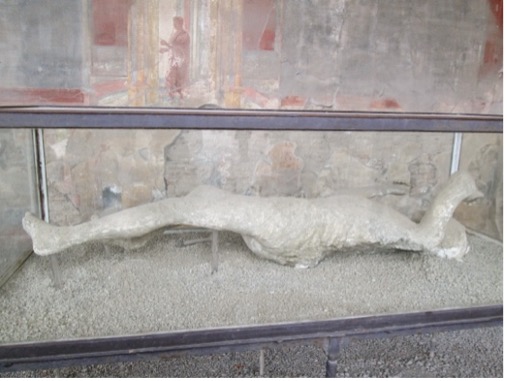
Victim of volcano from that home. Notice the intact mural wall.
Despite the long journey from Rome, Pompeii is a must for any Italy visit – even a few hours here connects you to an extraordinary moment frozen in time.
Day 2: Colosseum & Forum
Met our Rome guide, Luca, who accompanied us for the next two days – gracious and knowledgeable, a stark contrast to yesterday.
What I particularly like about private tour guides assigned to us is the time we are learning about their life also.
As a tourist it’s very unlikely you will just talk with a native of the country. Not only about where to get the best Gelato but what’s it like for their children in school, how is Italy’s football this year.
A regular conversation informing us about day-to-day life while we learn about ancient life.
No image says “Rome” more than the Colosseum – and for good reason. Standing inside this massive amphitheater, you can almost hear the roar of ancient crowds… or was that all the tourists?
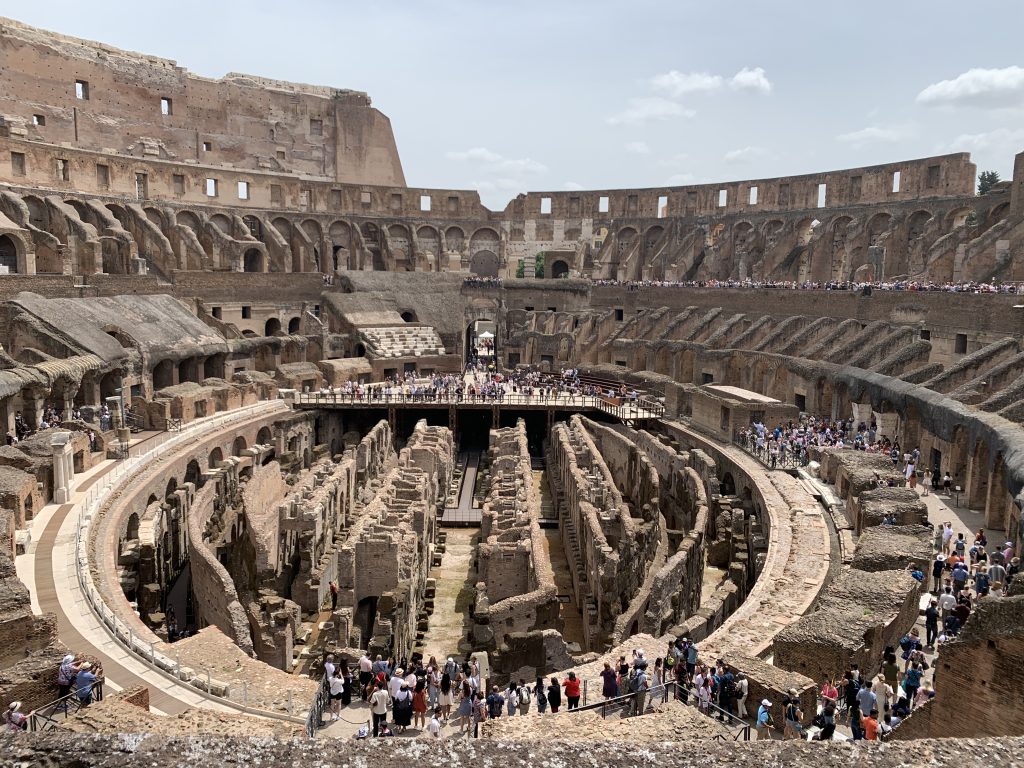
The Colosseum is surrounded by a circus of tourism, but stepping inside this structure that was once gleaming white marble brings history to life.
Across the way lies the Forum and its hills – Rome’s famous seven hills. Standing in this ancient marketplace, there’s almost too much to absorb.
Here you’re standing where the Roman world once conducted its daily life—where all roads led and history unfolded.
The Colosseum and Forum are typically visited together due to their proximity.
Plan on a long morning or afternoon for both sites.
Our gentleman guide not only brought history alive but also walked us back to our hotel, sharing excellent restaurant recommendations in our neighborhood.
We spent the afternoon discovering the shops and stores in the Piazza Santissima Annunziata neighborhood.
Great guides make a great trip.
Day 3: Vatican
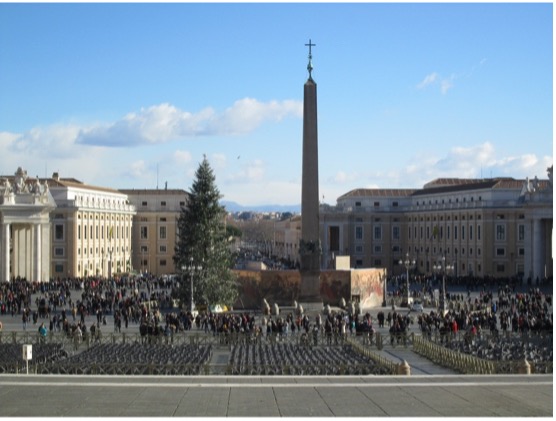
St. Peter’s Square offers a view of diverse crowds and pilgrims against the backdrop of Bernini’s majestic Baroque colonnades and the towering basilica.
Luca meets us for the second day at a designated spot outside Vatican City.
We scheduled to enter the Vatican entry as it opens. But apparently so is everyone else.
The path to the Sistine Chapel winds through the Vatican Museums like a pilgrim’s route, each turn revealing new treasures.
This is where having an expert guide like Luca proves invaluable – without his knowledge, we would have walked past countless masterpieces, missing their profound significance.
In these vast corridors of history, he knows precisely where to pause, when to direct our gaze upward, and how to unveil centuries of stories hidden in plain sight.
Finally, we approach the Chapel entrance, where vigilant guards call out “Silenzio!” and “No foto!” as signs in multiple languages echo the message. They scan the crowd, alert to raised phones and whispered exchanges.
Once inside, time seems to pause as Michelangelo’s frescoes, including the iconic ‘Creation of Adam,’ overwhelm with their Renaissance brilliance across 12,000 square feet of ceiling and walls. This working chapel, still used for papal conclaves, demands the silence its masterpieces and sanctity deserve.
After the Sistine Chapel, our final destination awaits: St. Peter’s Basilica, where scale and splendor reach new heights.
Stepping into St. Peter’s Basilica, Christendom’s largest church, Michelangelo’s Pietà and Bernini’s bronze baldachin lead to the soaring dome, where light streams down 450 feet through gilded heights. This masterwork of sacred art stands as the Vatican’s crowning glory.
Plan for at least three hours at the Vatican.
You could rush through, pushing past Renaissance masterpieces to the Sistine Chapel, glance at Michelangelo’s ceiling, and hurry through St. Peter’s Basilica – another tourist checkbox ticked.
But you’ll miss centuries of human achievement and world-changing history.
Architectural Tour – Still tired from the crush of the Vatican we trudged on for about 3 hours.
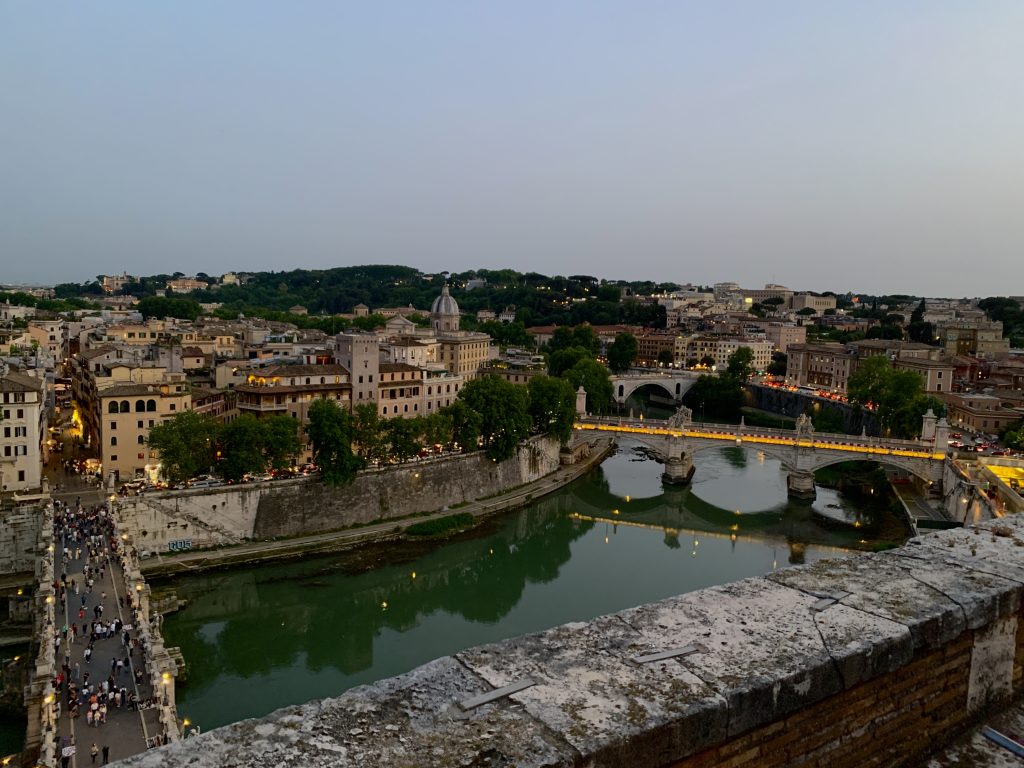
Our guide, Nico, leads us through ancient streets that tell a million stories – if those cobblestones could talk.
Around one corner stands a massive arch weathered by centuries, around another, a half-crumbling ruin that Julius Caesar might have passed.
We visit the known sites, the Pantheon, pass the Trevi Fountain, then wander into old neighborhoods that have stories of their own, where we discover a small church, St. Cecilia.
It’s an ancient city that has continually built and been rebuilt upon itself.
Day 4: Crypts and Catacombs
Booked with a small outside tour group, our first stop is the Capuchin Crypt.
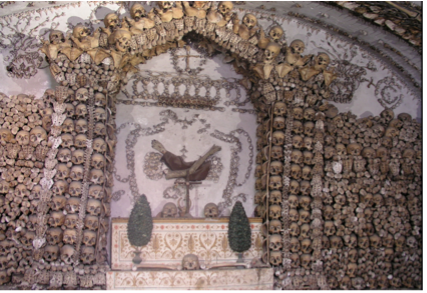
The bones of over 3,700 Capuchin friars are artfully arranged in intricate patterns – elaborate ceiling designs, chandeliers, and even full skeletal monks wearing their brown robes. The meaning – that our souls transcend our earthly remains – is understood in profound silence.
We then proceed outside the old gates of Rome on the Appian Way to St. Callixtus. The crypts show a testament to the early Christian believers, an understanding of faith so deep they carved their hopes into these dark tunnels, marking their graves with symbols of peace and eternal life even in times of persecution.
Day 5: Leave Rome in the morning for the train station and Florence
Four days in Rome feel both plentiful and barely a glimpse. Like countless travelers before us, we know we’ll return to this eternal city, where endless layers of history pulse with vibrant life
Florence: A New Year’s Gift
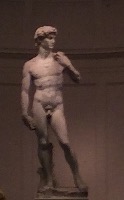
Sometimes traveling during holidays brings unexpected treasures – like in Florence on New Year’s Eve afternoon, when we found ourselves the very last visitors of the day to see Michelangelo’s David.
Just us, no crowds.
The wheels of our suitcases stutter against ancient cobblestones as we make our way toward our hotel set next to the Arno.
Chill cuts through our coats, but we barely notice, transfixed by the city unfolding before us. The very stones beneath our feet speak of medieval traders and Renaissance artists who walked these same paths, their footsteps having worn smooth these cobbles that now rattle our luggage wheels.
We meet our expert Florence guide, Gio, late in the afternoon at the Galleria dell’Accademia.
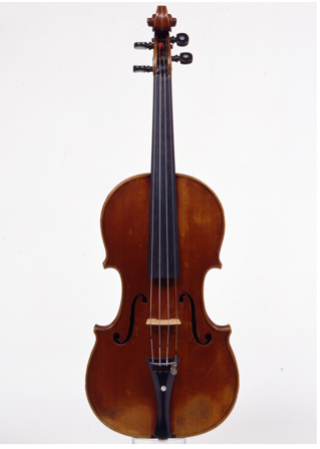
My daughter wants to see the musical instrument collection – a chance to see up close Stradivari craftsmanship.
The museum is unusually quiet as Gio sheepishly confesses he hadn’t realized they’d close early for New Year’s Eve. In our abbreviated tour, he guides us through the highlights, ending with the three of us beneath Michelangelo’s David, all of us dwarfed by its presence.
Loads of Italian teens and young adults head for Florence on New Year’s Eve for lots of music concerts and celebrations. The renaissance city has its own vibrancy.
Through a search I’ve booked us for a unique Opera New Year’s Eve performance by a small professional opera group and a six-course dinner. We are entertained in the anteroom of a church.
It’s a once in a lifetime experience.
Day 6: Pisa & Florence
We’ve been booked by our agent on a bus tour to Pisa.
I don’t know anything about Pisa except it has a leaning tower. It’s over an hour drive. The city of Pisa is a historic university town, its buildings dating back to 1343. Beyond the famous tower, medieval streets and bridges span the Arno River, remnants of the city’s powerful maritime past.
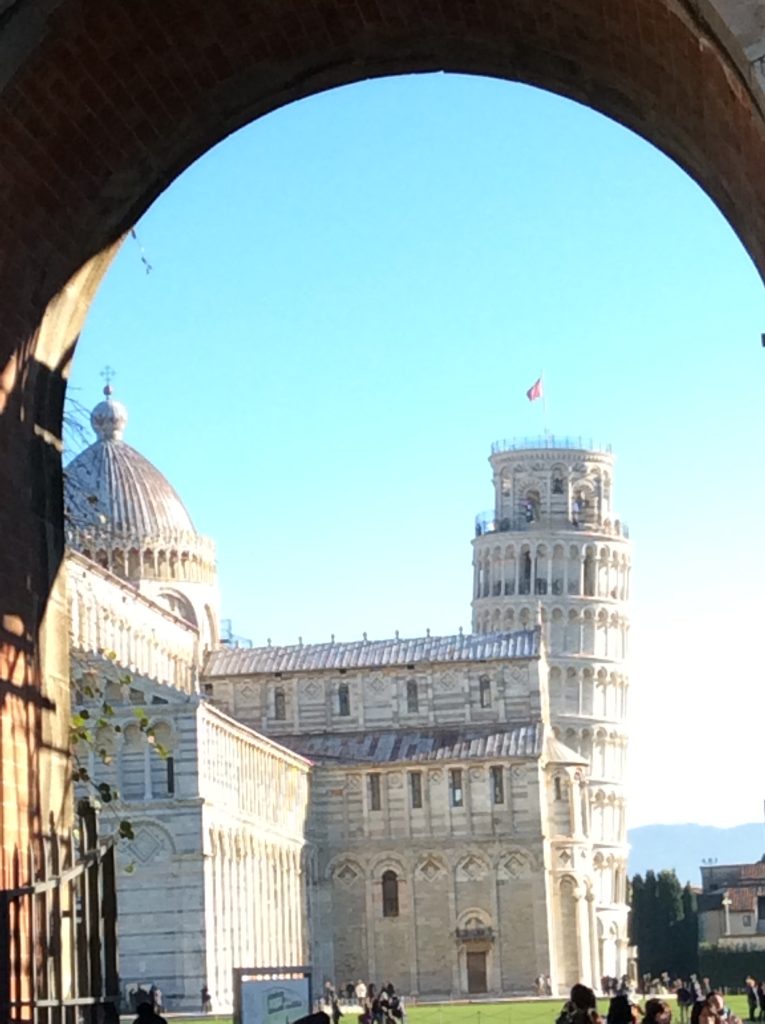
We climb to the top of the tower – surprisingly, many tourists don’t make the ascent.
Most are satisfied taking a picture tilting with the leaning tower.
Notice my daughter will have none of it
After a stroll through town, we’re content to return to Florence. You could probably have a complete Italian experience without seeing the Leaning Tower of Pisa – that famous architectural mishap.
The afternoon is spent viewing architectural mastery.
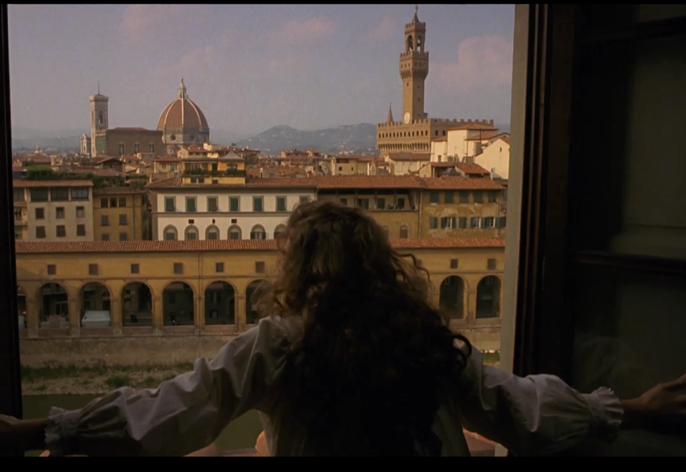
It’s like visiting a movie set. Our architectural tour of Florence is following A walk in Florence inspired by Ivory’s “A room with a view.
Day 7: Florence
While tourists snake around the Uffizi Gallery, we meet our art historian Gio and slip through with skip the line-entry tickets.
Moving ahead of the crowds, he guides us swiftly from masterpiece to masterpiece. In these precious early moments, we experience the Uffizi as intended – a pure dialogue between past and present, artist and observer, guide and guided.
Sometimes a scheduled tour simply disappoints, despite everyone’s best intentions.
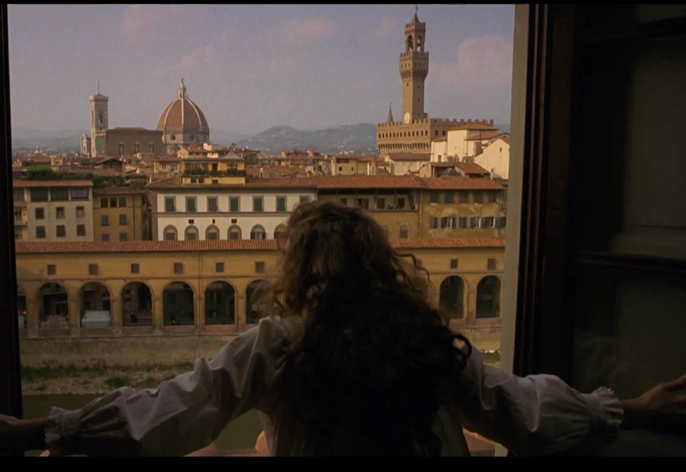
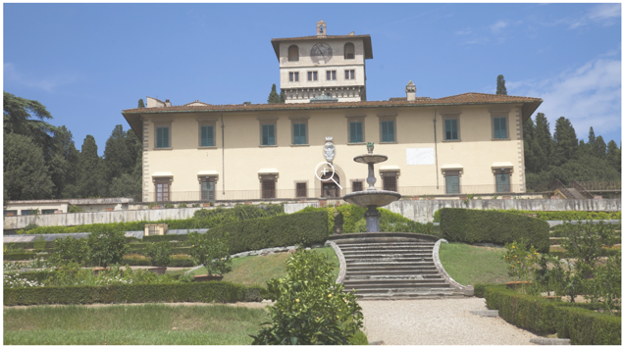
On our final Florence afternoon, our driver took us up into the hillside toward the 16th century Medici Villa La Petraia. By arrival, winter cold was setting in and daylight fading. We found ourselves nearly alone in the UNESCO site, following a guide who spoke only Italian through grand but meaningless rooms – their Medici stories and significance lost in translation.
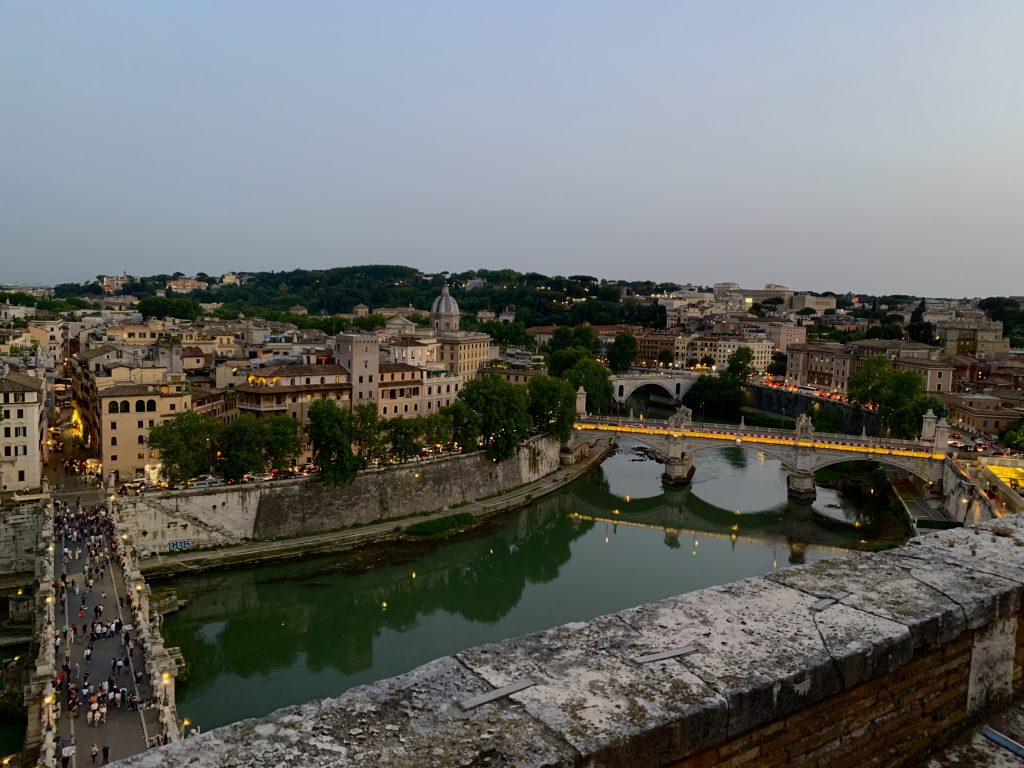
Our week in Rome and Florence concludes.
My daughter’s first trip to Europe proved the timing was perfect.
Italy shared its treasures – art, faith, ancient streets, and timeless stories – creating memories we’ll both carry forward, and promises to return.


Sign up for the best travel tips and adventures!
We guarantee no spam, only valuable travel guides for your journeys.